Embrace natural wellness with HerbalVoice. Expert insights on herbal remedies, superfoods, and holistic health to help you boost immunity, find balance, and thrive. Your journey to vibrant, natural living starts here
The Digital Pulse: Can AI Give a Medical Diagnosis From Images Better Than Doctors?
Elon Musk claims AI can give a medical diagnosis from images better than doctors. Is it hype or a healthcare revolution? Discover the truth about medical AI!
1/2/202612 min temps de lecture
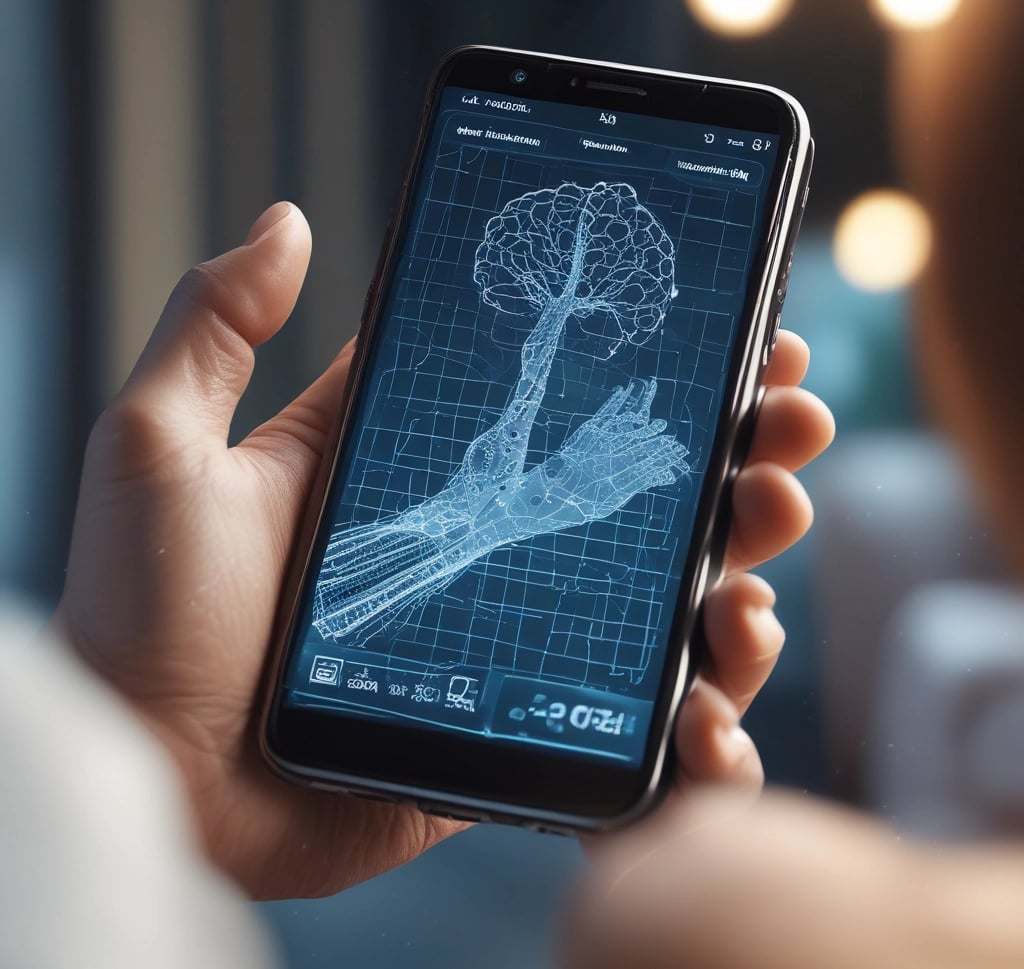
The Digital Pulse: Can AI Give a Medical Diagnosis From Images Better Than Doctors?
The tech world is no stranger to bold claims, but when Elon Musk suggested that AI can give a medical diagnosis from images better than doctors, the collective heart rate of the medical community spiked. It’s a provocative idea, isn’t it? The notion that a series of algorithms, trained on billions of pixels, could somehow possess a "sharper eye" than a radiologist with twenty years of experience. But as we peel back the layers of this high-tech onion, we find a complex mix of brilliant potential, Silicon Valley bravado, and some very sobering biological realities.
Introduction
Let’s be honest: we live in an era where we trust our phones to navigate us through blizzards and manage our life savings. So, why not our health? The premise is simple enough. Medical imaging—whether it’s an X-ray, an MRI, or a simple photo of a suspicious mole—is essentially data. Since AI thrives on data, it stands to reason that it could spot a microscopic fracture or a faint shadow of a tumor faster than a human who hasn't had their morning coffee yet.
However, medicine is rarely just about "spotting" things. It’s about context, nuance, and the heavy burden of responsibility. While the headline that AI can give a medical diagnosis from images better than doctors makes for great clickbait, the reality on the ground in hospitals and clinics is far more nuanced. In this deep dive, we’ll explore the "superpowers" of medical AI, the dangerous pitfalls of over-reliance on machines, and why your doctor isn't packing up their stethoscope just yet.
The Allure of the Algorithm: Why We Want to Believe
It’s easy to see why the tech elite are bullish on this. Human doctors are, well, human. They get tired. Their eyes fatigue after looking at the thousandth scan of the day. They have subconscious biases. An AI, conversely, doesn't need sleep, doesn't get bored, and can process vast libraries of information in the blink of an eye.
The Speed Demon Effect
In an emergency room setting, every second counts. If an AI can flag a brain hemorrhage on a CT scan in three seconds, while the radiologist is tied up with another patient, that’s a win for humanity. This isn't science fiction; it’s already happening. AI systems are becoming incredibly adept at "triage"—sorting the "definitely fine" from the "we need to look at this right now."
Unmatched Pattern Recognition
AI excels at narrow tasks. If you show a deep-learning model a million images of diabetic retinopathy, it becomes a world-class expert at finding it. In many peer-reviewed studies, these models have indeed matched or slightly edged out human experts in identifying specific pathologies. But—and this is a big "but"—identifying a pattern is not the same thing as diagnosing a human being.
The "Diagnosis" Dilemma: More Than Just Pictures
One of the biggest hurdles in accepting that AI can give a medical diagnosis from images better than doctors is the definition of "diagnosis" itself. To a computer, a diagnosis is a statistical probability. To a doctor, it's a conclusion drawn from a sea of variables.
The Missing Context
Imagine an AI looks at an image of a lung and sees a shadow. It flags it as a 92% probability of pneumonia. Brilliant, right? But the doctor knows the patient was just in a car accident and has a bruised chest wall. Or perhaps the patient has a rare autoimmune disease that mimics the look of pneumonia.
Medical History: AI often lacks the "story" of the patient.
Physical Exam: A machine can’t feel a swollen lymph node or hear a heart murmur.
Lab Results: Imaging is just one piece of the puzzle, often requiring blood work to confirm.
The Problem of "Black Box" Logic
When a doctor makes a call, they can explain their reasoning. They can say, "I see X, which in the context of Y, usually means Z." Many AI models are "black boxes." They give an answer, but they can’t always show their work. In medicine, "just trust me" isn't a great protocol, especially when a patient’s life is on the line.
Where AI Actually Wins (The Narrow Victory)
Lest we sound too cynical, let’s give credit where it’s due. AI is transforming specific niches of medicine in ways that are truly breathtaking. When we talk about AI being "better" than doctors, we are usually talking about very specific, constrained environments.
Screening Large Populations: In regions where there are few specialists, AI can screen thousands of retinal scans or mammograms, flagging only the suspicious ones for a human to review. This expands access to care exponentially.
Quantification: Humans are bad at measuring volumes by eye. AI can precisely calculate the size of a tumor or the volume of blood flow in a heart chamber with mathematical precision.
Consistency: An AI will give the same answer at 3:00 AM that it gave at 9:00 AM. In the high-stakes world of medical imaging, that consistency is a massive asset.
Meanwhile, researchers are finding that the "Centaur" approach—human and AI working together—consistently outperforms either one alone. It turns out that a doctor backed by an algorithm is the real "super-doc" of the future.
The Responsibility Gap: Who Goes to Jail?
Here’s a thorny question: if an AI misses a tumor, or worse, suggests a radical treatment based on a misinterpretation, who is responsible? You can't sue a piece of code for malpractice. You can't strip a server of its medical license.
The Ethical Quagmire
Doctors take an oath. They carry the emotional and legal weight of their decisions. AI doesn't feel the weight of a wrong diagnosis. It doesn't have to sit in a room and tell a family that the treatment didn't work. This "human element" isn't just sentimental fluff; it’s a core part of the checks and balances in our healthcare system.
Regulatory Red Tape
The FDA and other global bodies are working overtime to figure out how to regulate "Software as a Medical Device." For now, most AI tools are cleared only as "assistive." They are there to help the doctor, not replace them. Musk’s vision of an autonomous diagnostic machine faces a mountain of legal and regulatory hurdles before it ever hits your local clinic.
The "Musk Factor": Visionary or Hype-Man?
Elon Musk is a master of the "future-tense." He speaks about where we are going as if we are already there. While his claim that AI can give a medical diagnosis from images better than doctors might be true in a lab setting with a very specific dataset, applying that to the messy, unpredictable world of general medicine is a huge leap.
Often, these bold statements ignore the "long tail" of medicine—the rare diseases, the atypical presentations, and the patients who don't fit the mold. AI is famously bad at "edge cases." If it hasn't seen it 10,000 times in its training data, it might just make a confident, and deadly, guess.
Why Clinical Judgment Still Reigns Supreme
At the end of the day, medicine is an art practiced through the lens of science. It requires empathy, intuition, and the ability to pivot when the data doesn't make sense.
The "Gut Feeling"
Ask any veteran physician, and they’ll tell you about a time they "just knew" something was wrong despite a clean scan. This isn't magic; it’s the result of the human brain's incredible ability to synthesize thousands of subtle cues—the color of a patient's skin, the way they’re breathing, the hesitation in their voice. AI can’t "feel" a situation.
Holistic Healing
A diagnosis is just the beginning. The next step is a treatment plan, which involves understanding a patient's values, their lifestyle, and their fears. Will this patient actually take this medication? Can they afford this surgery? A doctor navigates these human realities; an AI just sees a binary choice.
FAQ: Decoding the AI vs. Doctor Debate
Q: Can AI currently diagnose cancer better than a radiologist? A: In some studies, AI has shown a higher sensitivity in detecting early-stage cancers in specific types of scans (like mammography). However, it also tends to produce more "false positives," which can lead to unnecessary biopsies and patient anxiety.
Q: Will AI replace radiologists in the next ten years? A: Most experts say no. Instead, the job of the radiologist will change. They will spend less time doing the "grunt work" of counting nodules and more time interpreting complex cases and consulting with other physicians.
Q: Is it safe to trust an AI-generated diagnosis? A: Currently, any AI "diagnosis" should be verified by a licensed medical professional. We aren't at the stage of autonomous machine diagnosis yet.
Q: Why does Elon Musk think AI is better at this? A: Musk focuses on the exponential growth of computing power and neural networks. From a purely computational standpoint, AI's potential is limitless, but he often downplays the practical and ethical complexities of healthcare.
Q: Does AI struggle with different skin tones or ethnicities? A: Yes, this is a major concern. If an AI is trained primarily on images of one demographic, it may perform poorly (and dangerously) on others. This "algorithmic bias" is a significant hurdle in medical AI.
Conclusion
So, where does that leave us? Is the claim that AI can give a medical diagnosis from images better than doctors a glimpse into our inevitable future or a tech-bro's pipe dream? The truth, as usual, lies somewhere in the middle.
AI is an incredible tool—perhaps the most powerful tool ever introduced to the field of medicine. It can see things we miss, work until the sun comes up, and process data at a scale that boggles the mind. In the hands of a skilled doctor, AI is a superpower. But on its own? It’s a Ferrari without a steering wheel.
We should embrace the technology, certainly. We should fund it, refine it, and use it to catch diseases earlier than ever before. But we must also remember that a patient is not a JPEG. A person is a living, breathing, complex story that requires a human listener. Until an AI can sit at a bedside and hold a hand, the doctor’s place in the healing process is safe.
The "Diagnosis" Dilemma: More Than Just Pictures
One of the biggest hurdles in accepting that AI can give a medical diagnosis from images better than doctors is the definition of "diagnosis" itself. To a computer, a diagnosis is a statistical probability. To a doctor, it's a conclusion drawn from a sea of variables.
The Missing Context
Imagine an AI looks at an image of a lung and sees a shadow. It flags it as a 92% probability of pneumonia. Brilliant, right? But the doctor knows the patient was just in a car accident and has a bruised chest wall. Or perhaps the patient has a rare autoimmune disease that mimics the look of pneumonia.
Medical History: AI often lacks the "story" of the patient.
Physical Exam: A machine can’t feel a swollen lymph node or hear a heart murmur.
Lab Results: Imaging is just one piece of the puzzle, often requiring blood work to confirm.
The Problem of "Black Box" Logic
When a doctor makes a call, they can explain their reasoning. They can say, "I see X, which in the context of Y, usually means Z." Many AI models are "black boxes." They give an answer, but they can’t always show their work. In medicine, "just trust me" isn't a great protocol, especially when a patient’s life is on the line.
Where AI Actually Wins (The Narrow Victory)
Lest we sound too cynical, let’s give credit where it’s due. AI is transforming specific niches of medicine in ways that are truly breathtaking. When we talk about AI being "better" than doctors, we are usually talking about very specific, constrained environments.
Screening Large Populations: In regions where there are few specialists, AI can screen thousands of scans, flagging only the suspicious ones for a human to review.
Quantification: Humans are bad at measuring volumes by eye. AI can precisely calculate the size of a tumor or the volume of blood flow in a heart chamber.
Consistency: An AI will give the same answer at 3:00 AM that it gave at 9:00 AM.
The Responsibility Gap: Who Goes to Jail?
Here’s a thorny question: if an AI misses a tumor, or worse, suggests a radical treatment based on a misinterpretation, who is responsible? You can't sue a piece of code for malpractice. You can't strip a server of its medical license.
The Ethical Quagmire
Doctors take an oath. They carry the emotional and legal weight of their decisions. AI doesn't feel the weight of a wrong diagnosis. It doesn't have to sit in a room and tell a family that the treatment didn't work. This "human element" isn't just sentimental fluff; it’s a core part of the checks and balances in our healthcare system.
FAQ: Decoding the AI vs. Doctor Debate
Q: Can AI currently diagnose cancer better than a radiologist? A: In some studies, AI has shown higher sensitivity in detecting early-stage cancers in specific types of scans. However, it also tends to produce more "false positives."
Q: Will AI replace radiologists in the next ten years? A: Most experts say no. Instead, the job of the radiologist will change to focus on complex cases and consultations.
Q: Is it safe to trust an AI-generated diagnosis? A: Currently, any AI "diagnosis" should be verified by a licensed medical professional. We aren't at the stage of autonomous machine diagnosis yet.
Conclusion
So, where does that leave us? Is the claim that AI can give a medical diagnosis from images better than doctors a glimpse into our inevitable future or a tech-bro's pipe dream? The truth, as usual, lies somewhere in the middle.
AI is an incredible tool—perhaps the most powerful tool ever introduced to the field of medicine. In the hands of a skilled doctor, it’s a superpower. But on its own? It’s a Ferrari without a steering wheel. We should embrace the technology, but we must also remember that a patient is not a JPEG.
The 2026 Consumer Guide: Top AI Dermatology Apps
The market is currently split between "Beauty Tech" (skincare routines) and "Medical Triage" (skin cancer screening). While many claim to be as accurate as a pro, the 2025 clinical data suggests we should use them as a "warning bell," not a final verdict.
1. Skinive: The All-Rounder
Skinive has emerged as one of the most versatile apps in 2025. It is CE-marked (medical grade in Europe) and claims to recognize over 50 different skin conditions.
Best for: General monitoring of acne, eczema, and psoriasis.
The "Magic": It uses a smartphone camera to highlight potentially dangerous areas and integrates with clinical workflows so you can send reports directly to your GP.
2. DermaSensor: The FDA Trailblazer
While not strictly an "app" you download on your iPhone, DermaSensor is the first FDA-cleared AI handheld device for primary care physicians (and increasingly available in high-end concierge clinics).
The Tech: It uses "Elastic Scattering Spectroscopy"—basically, it bounces light off your skin cells and an AI analyzes the "echo" to detect cancer in seconds.
The Stats: It boast a 96% sensitivity for the three most common skin cancers.
3. SkinVision: The Cancer Specialist
One of the most researched apps on the market, SkinVision focuses almost exclusively on skin cancer.
Pros: It has a massive database of over 3.5 million risk assessments.
Cons: Independent studies in late 2024 showed it still misses a small percentage of melanomas (low specificity). It’s great at saying "see a doctor," but it sometimes gets a bit "alarmist."
4. Miiskin: The "Digital Map"
Instead of just diagnosing a single spot, Miiskin helps you "map" your entire body. In 2026, its AI "Skin-Mapping" feature can automatically compare photos taken months apart and highlight new moles or changes that are too subtle for the human eye to notice.
The "Black Box" Problem: Why Doctors Are Skeptical
Even if an app gets the answer right 99% of the time, medical professionals face a terrifying hurdle: The Black Box. This refers to the fact that deep-learning AI models are so complex that even their creators can't always explain why the AI made a specific decision.
The "Clever Hans" Effect in Medicine
Researchers have found that AI can sometimes be "right for the wrong reasons." In one famous 2024 study, an AI was "better than doctors" at identifying skin cancer, but it was actually just looking for rulers. Because doctors often place a ruler next to a suspicious mole for scale, the AI learned that "Ruler = Cancer." Without the ruler, its accuracy plummeted.
How Researchers are "Breaking the Box" in 2026
To fix this, the medical community is shifting toward Explainable AI (XAI). Here’s how they are making the "magic" transparent:
Heat Maps (Grad-CAM): Instead of just saying "Cancer," the AI generates a "heat map" over the image, showing the doctor exactly which pixels (e.g., irregular borders or color patches) triggered the alarm.
Uncertainty Quantification: New models in 2026 are being programmed to say, "I think this is a mole, but I'm only 60% sure. You should check the patient's family history." This forces the human back into the decision-making loop.
Rule-Based "Hybrid" Models: Engineers are combining "Deep Learning" (which is fast) with "Rule-Based AI" (which follows medical logic). This ensures the AI isn't just looking for rulers or background lighting.
The Verdict: Use, but Verify
If you use these apps, remember that AI can give a medical diagnosis from images better than doctors only in the sense of a "pre-scan." Think of them like a smoke detector: they are great at telling you there might be a fire, but they aren't equipped to put the fire out.
Quick Tips for 2026 Users:
Check for FDA/CE Marking: If the app doesn't have regulatory clearance, it’s a toy, not a medical tool.
Use Good Lighting: AI "hallucinates" when images are blurry or dark.
The "ABCDE" Rule Still Applies: If a mole is Asymmetric, has irregular Borders, multiple Colors, a large Diameter, or is Evolving—go see a human, regardless of what the app says.
2026 Price Comparison: AI in Your Pocket
Whether you're looking for a quick scan or long-term tracking, the market has settled into three distinct pricing tiers. Note that many apps now offer "bundle" deals with telehealth consultations.
Contact
Téléphone
healthyyyyplus@gmail.com
+33 612379219