Embrace natural wellness with HerbalVoice. Expert insights on herbal remedies, superfoods, and holistic health to help you boost immunity, find balance, and thrive. Your journey to vibrant, natural living starts here
Dopamine and Compulsive Behavior Insights
Explore how dopamine influences compulsive behavior and discover science-backed strategies to regain balance. Dr. Anna Lembke explains the relationship between pleasure and pain, offering insights to help you break free from destructive patterns.
2/7/202613 min temps de lecture
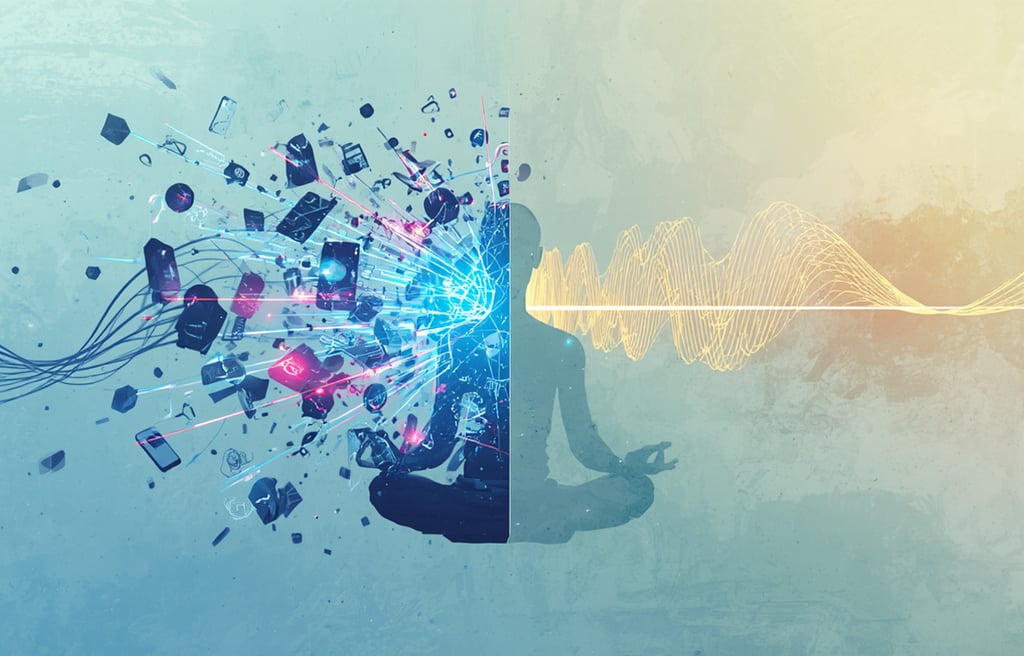
Dopamine Nation: Finding Balance in the Age of Indulgence
How Understanding Your Brain's Reward System Can Help You Break Free from Compulsive Overconsumption #subtitles#
Introduction: Why We Can't Stop Scrolling
You've probably felt it—that irresistible urge to check your phone one more time, binge another episode, or scroll just a little longer. Maybe you've wondered why it's so hard to put down the bag of chips or why shopping online at midnight feels almost automatic. Here's the thing: you're not lacking willpower. You're up against your own biology.
In Dopamine Nation, Dr. Anna Lembke pulls back the curtain on why modern life feels so addictive. As a Stanford psychiatrist who's spent decades treating addiction, she's watched the problem evolve beyond drugs and alcohol. Today's battlefield is everywhere—in our pockets, on our screens, and woven into the fabric of daily life. The smartphone has become what she calls "the modern-day hypodermic needle," delivering hits of digital dopamine around the clock.
What makes this book essential isn't just the neuroscience—it's the roadmap. Lembke doesn't simply diagnose the problem; she offers concrete strategies for finding balance in a world designed to keep us hooked. Through her patients' stories and cutting-edge research, she reveals a surprising truth: the relentless pursuit of pleasure actually leads to pain. But there's a way out.
This isn't about becoming a monk or abandoning technology. It's about understanding how your brain works so you can work with it, not against it. Whether you're struggling with social media, food, shopping, or any of the countless high-dopamine activities flooding modern life, the insights in Dopamine Nation offer a path to contentment that doesn't require white-knuckling your way through deprivation.
Understanding Dopamine: Your Brain's Double-Edged Sword
Dopamine gets a bad rap, but it's not inherently the villain. Actually, this neurotransmitter is essential for survival—it's what motivated our ancestors to hunt for food, seek shelter, and reproduce. The problem isn't dopamine itself. The problem is what happens when we have unprecedented access to things that trigger massive dopamine releases without the effort our brains evolved to expect.
Think of dopamine as your brain's currency of desire. When you encounter something pleasurable, dopamine floods specific pathways in your brain, creating that rush of excitement and motivation. Your brain essentially says, "Remember this! Do it again!" It's a learning mechanism that kept humans alive for millennia. But evolution didn't prepare us for TikTok, Doritos, or online gambling.
Lembke introduces a crucial concept: the pleasure-pain balance. Your brain operates on a seesaw—when pleasure tips up, pain automatically tips down to compensate. This isn't philosophical; it's neurological. Your brain works constantly to maintain equilibrium, or what scientists call homeostasis. The more intense the pleasure, the harder your brain works to level things out.
Here's where it gets tricky. When you repeatedly stimulate that dopamine pathway—say, by checking Instagram every few minutes—your brain adapts. It down-regulates dopamine receptors and reduces dopamine transmission. You need more of the stimulus to feel the same pleasure. Sound familiar? That's tolerance, the same mechanism behind drug addiction. And when you stop the behavior, you don't return to neutral—you dip below baseline into a dopamine deficit state that feels like anxiety, irritability, or depression.
The modern environment bombards us with what Lembke calls "high-reward, high-dopamine stimuli." Unlike our ancestors who had to work hard for occasional dopamine hits (killing a mammoth, finding honey), we face a constant deluge. Food engineered to maximize palatability. Games designed by neuroscientists to be maximally engaging. Social platforms that exploit our tribal need for validation. The increased numbers, variety, and potency of these stimuli is staggering compared to even twenty years ago.
What's particularly insidious is the speed and ease of access. You don't have to leave your couch to gamble, shop, or consume pornography. The friction that once protected us—physical effort, social consequences, limited availability—has vanished. We're essentially running evolved brains on modern software they weren't designed to handle.
The Pain That Follows Pleasure: Understanding the Comedown
One of Lembke's most powerful insights is that pain doesn't just follow pleasure—it's the direct consequence of it. This isn't karma; it's biochemistry. Every time you tip the pleasure-pain balance toward pleasure, your brain initiates a counter-response to restore equilibrium. The bigger the tip, the harder the snap-back.
Her patients' stories illustrate this vividly. There's the successful professional who can't stop reading romance novels, reading up to 20 hours straight despite responsibilities crumbling around her. The high-achieving student whose video game habit transforms from relaxation to compulsion, ultimately requiring residential treatment. The woman whose cannabis use—initially helpful for anxiety—becomes the source of anxiety when she tries to stop.
These aren't cautionary tales about weak-willed people. They're demonstrations of universal brain mechanisms. When you binge-watch a series, eat an entire pizza, or scroll for hours, you're not just experiencing pleasure in the moment. You're setting up neurological debt that comes due later as irritability, restlessness, or that vague sense that something's missing.
Lembke explains that with repeated exposure, the pleasure-pain balance doesn't just return to neutral—it tips toward pain even before you indulge. You start needing the substance or behavior just to feel normal. This is the hallmark of addiction: using not to feel good, but to not feel bad. The thing that once brought joy now barely staves off discomfort.
Interestingly, this mechanism explains why we often feel worse despite having more access to pleasure than any previous generation. We're chasing an equilibrium that keeps moving as our brains adapt. It's like running on a treadmill that speeds up every time you catch your breath. The solution isn't running faster—it's stepping off the treadmill entirely, at least temporarily.
The emotional and psychological toll extends beyond neurotransmitters. Compulsive overconsumption erodes self-respect. You make promises to yourself you can't keep ("Just one more episode"). You hide behavior from loved ones. Time vanishes into activities that don't align with your values. The shame and secrecy create their own suffering, layered on top of the neurological pain.
The Path to Balance: Practical Strategies from Dopamine Nation
So how do you reset a system that's gone haywire? Lembke offers strategies grounded in both neuroscience and the wisdom of recovery communities. The cornerstone is surprisingly straightforward, if not easy: abstinence.
Before you close this article, hear her out. Abstinence doesn't necessarily mean forever. Lembke recommends a four-week dopamine fast from your substance or behavior of choice. Four weeks allows your brain's pleasure-pain balance to reset. During this period, you'll likely feel worse before you feel better—that's the pain side of the balance asserting itself without the pleasure to counteract it. But typically around week two or three, something shifts. The compulsion weakens. Other activities start feeling rewarding again.
This might sound extreme for something like social media or sugar, but that's the point. If you can't take a month off, that's diagnostic information. It suggests the behavior has crossed from enjoyment to compulsion. And importantly, the temporary discomfort of abstinence is usually far less intense than the chronic, low-grade suffering of constant overconsumption.
Lembke also explores self-binding—creating barriers between yourself and the object of desire. Odysseus had himself tied to the mast to resist the Sirens' song. Modern equivalents include deleting apps, using website blockers, or keeping tempting foods out of the house. The goal isn't to test your willpower every day; it's to make the default choice the healthy one.
Physical pain, counterintuitively, can help reset the pleasure-pain balance from the opposite direction. This doesn't mean self-harm—it means embracing discomfort through exercise, cold showers, or other challenging but healthy activities. When you tip the balance toward pain through voluntary, controlled experiences, your brain compensates by releasing dopamine on the rebound. This is why people often feel euphoric after intense workouts or ice baths.
Radical honesty is another pillar of recovery that Lembke emphasizes. Addiction thrives in secrecy and self-deception. By telling the truth—to yourself, to others, to a therapist or support group—you interrupt the cycle of shame and isolation that fuels compulsive behavior. There's neuroscience here too: verbalizing and sharing struggles engages different brain regions that can help regulate emotion and impulse.
Connection with others matters immensely. We evolved as social creatures, and authentic relationships provide a form of dopamine that's sustainable and healthy. Unlike the hollow hit from a "like" on Instagram, real connection involves reciprocity, vulnerability, and presence. It takes more effort, but it doesn't lead to tolerance and withdrawal.
Finally, Lembke discusses finding meaning and purpose beyond pleasure-seeking. When your life is organized around avoiding pain and chasing pleasure, you're essentially enslaved to the next dopamine hit. But when you engage with activities that matter to you—creating, contributing, learning, connecting—the neurochemical rewards are more complex and satisfying. Purpose provides a different kind of motivation, one that doesn't depend on the hedonic treadmill.
Common Challenges and Solutions in Breaking the Cycle
Knowing what to do and actually doing it are different battles. Lembke acknowledges the obstacles that trip people up when they try to change their relationship with high-dopamine behaviors.
The first week of abstinence is brutal. You'll feel anxious, irritable, and preoccupied with what you're giving up. Your brain is screaming for the stimulus it's learned to expect. Lembke advises patients to plan for this period: clear your schedule of high-stress obligations if possible, line up support, and remind yourself that these feelings are temporary and actually indicate the reset is working. If you're struggling with something serious, medical supervision may be necessary—withdrawal from certain substances can be dangerous.
Social pressure presents another hurdle. We live in a culture that celebrates consumption and often ridicules restraint. If you tell friends you're taking a break from alcohol or social media, you might face mockery or pressure to "lighten up." Having a prepared response helps: "I'm doing an experiment to see how I feel" sounds better than launching into a lecture about dopamine regulation. Better yet, find people who support your goals or are working on similar changes.
Substitution is a tricky issue. When you give up one compulsive behavior, there's a risk of simply transferring to another. The person who quits drinking might start overeating. The solution isn't to pursue multiple abstinences simultaneously (usually overwhelming), but to remain aware of this tendency and address the underlying issues—often boredom, avoidance of emotions, or lack of purpose—rather than just swapping one fix for another.
Perfectionism sabotages many attempts at change. You abstain for three weeks, slip up once, and conclude you've failed. Lembke encourages self-compassion and persistence. One lapse doesn't erase your progress; the neurological reset you've achieved doesn't vanish immediately. What matters is the overall pattern. Did you learn something from the slip? Can you identify what triggered it and plan differently next time?
The "just this once" trap is perhaps the most common pitfall. After a successful abstinence period, you decide you can handle occasional use. For some people and some substances, this works. For others, it immediately reactivates the compulsion. Lembke suggests honest self-assessment: Are you constantly negotiating with yourself about when and how much? Are you thinking about the substance or behavior more than you'd like? If moderation requires constant mental effort and still leads to overconsumption, abstinence may be the more peaceful path.
Environmental triggers are everywhere. That coffee shop where you always scrolled Instagram. The couch where you binged TV shows. The stressed feeling that preceded your online shopping. Identifying and modifying these cues makes a huge difference. Change your routine, take a different route, create new associations. Your brain's conditioning is powerful, but it can be reconditioned with patience.
Myth-Busting: What Dopamine Nation Gets Right
There's a lot of misinformation about addiction, pleasure, and brain chemistry circulating online. Let's clarify what the science actually supports.
Myth: Dopamine is just the pleasure chemical. Actually, dopamine is more accurately described as the wanting or anticipation chemical. It's what makes you desire something, but not necessarily what makes you enjoy it. That's why scrolling Instagram can feel compulsive without feeling particularly pleasurable. Your brain is stuck in wanting mode, searching for the next hit, rather than savoring anything.
Myth: Only drugs and alcohol can be addictive. Research now recognizes behavioral addictions—gambling, gaming, shopping, pornography—as involving the same neural pathways as substance addictions. The brain doesn't distinguish much between chemical and behavioral rewards; what matters is the dopamine surge. Lembke's patients struggling with romance novels or exercise demonstrate that virtually any pleasurable activity can become compulsive under the right (or wrong) circumstances.
Myth: More pleasure equals more happiness. This is perhaps the most dangerous myth in modern culture. Beyond a certain point, additional pleasure doesn't increase wellbeing—it decreases it. The adaptation process means you need more to feel the same, and the recovery period between highs brings increased discomfort. A life organized around maximizing pleasure paradoxically leads to suffering.
Myth: You need to hit rock bottom before change is possible. While dramatic consequences sometimes provide motivation, you don't have to wait for catastrophe. Subtle signs—increasing tolerance, unsuccessful attempts to cut back, thinking about the behavior more than you'd like, continuing despite negative consequences—can be sufficient reason to make changes. Early intervention is far easier than trying to recover from severe addiction.
Myth: Willpower is the solution. If anything, Dopamine Nation demonstrates that relying solely on willpower is a recipe for failure. You're fighting against neurological mechanisms stronger than conscious intention. The solution involves changing your environment, building new habits, enlisting support, and understanding the science well enough to work with your brain's tendencies rather than against them.
Myth: A dopamine fast means eliminating all pleasure. Lembke's recommendation isn't about asceticism or punishing yourself. It's targeted abstinence from specific substances or behaviors that have become problematic. You can still enjoy walks, conversations, music, reading, or whatever brings you joy without triggering compulsion. The goal is resetting your relationship with things that have gotten out of control, not embracing joylessness.
Frequently Asked Questions
Q: How long does it take for dopamine levels to return to normal after stopping a compulsive behavior? A: The four-week mark is when most people notice significant improvement in the pleasure-pain balance. However, full recovery can take longer depending on the substance or behavior and how long you've been engaged in it. Some neural changes may take months to fully reverse.
Q: Can I do a dopamine fast from multiple things at once? A: While theoretically possible, Lembke generally recommends focusing on your primary problematic behavior first. Trying to change everything simultaneously often leads to feeling overwhelmed and giving up entirely. Once you've successfully addressed your main concern, you can tackle others.
Q: What if I can't avoid my addiction trigger because it's necessary for work, like using a computer? A: This requires a more nuanced approach. You might abstain from the specific problematic use (say, social media) while still using technology for necessary tasks. Setting strict boundaries, using website blockers, or designating specific times and places for necessary screen time can help separate required use from compulsive use.
Q: Is it normal to feel depressed or anxious during the abstinence period? A: Yes, completely normal. Your brain is adjusting to functioning without the regular dopamine surges it's adapted to. This temporary discomfort is actually a sign the reset is working. However, if feelings become severe or include thoughts of self-harm, seek professional support immediately.
Q: How do I know if I need professional help versus just trying the strategies on my own? A: If you've made multiple unsuccessful attempts to change, if the behavior is causing significant problems in relationships or work, if you're using substances like alcohol or drugs, or if you're experiencing severe emotional distress, professional support is advisable. There's no shame in getting help—it's often the most efficient path to recovery.
Q: Won't I miss out on social connections if I abstain from social media? A: Many people discover that stepping away from social media actually improves real relationships. You can maintain connections through direct messaging, phone calls, or in-person meetings. The superficial engagement of scrolling feeds often substitutes for, rather than supplements, genuine connection.
Q: Can exercise really help reset the dopamine system? A: Research suggests that challenging physical activity can help recalibrate the pleasure-pain balance by tipping it toward pain in a controlled, healthy way. The rebound effect generates endorphins and dopamine without the negative consequences of compulsive behaviors. Consistency matters more than intensity.
Q: What about medication for addiction or compulsive behaviors? A: Lembke doesn't oppose medication—as a psychiatrist, she prescribes it when appropriate. However, she emphasizes that medication works best combined with behavioral changes and addressing underlying issues. Pills alone rarely solve compulsion problems, but they can provide crucial support for some people.
Q: Is it possible to enjoy things in moderation after resetting, or is permanent abstinence required? A: This varies by person and substance. Some people successfully return to moderate use after a reset period. Others find that any exposure reactivates the compulsion. Honest self-assessment is key—if you're constantly managing intake and thinking about the behavior, abstinence might be the more peaceful option.
Q: How can I support someone struggling with behavioral addiction when they don't recognize it as a problem? A: You can't force insight, but you can express concern about specific behaviors you've noticed and how they affect you or the person. Avoiding judgment while being honest about impact sometimes opens the door. Leaving resources like Dopamine Nation accessible without pressure might plant a seed. Ultimately, readiness for change must come from within.
Conclusion: The Wisdom of Balance in an Unbalanced World
Dopamine Nation offers something rare: a clear-eyed look at modern life's biggest challenge without despair or finger-wagging. Dr. Lembke combines rigorous science with compassionate storytelling to illuminate why so many of us feel trapped in cycles of consumption and regret.
The central message isn't complicated: when you understand how your brain's reward system works, you can make choices that serve your long-term wellbeing rather than just quieting the next craving. The secret to finding balance lies in combining the science of desire with the wisdom of recovery—recognizing that pleasure and pain are two sides of the same neurological coin.
Your next step? Consider what behavior dominates more of your attention and time than you'd like. Ask yourself honestly whether you're using something to feel good or to avoid feeling bad. If you're ready for change, try the four-week reset Lembke recommends. Notice what happens when you stop arguing with your consumption patterns and simply step away for a defined period.
Individual needs vary. Consult a healthcare provider for personalized recommendations, especially if you're struggling with substance use or severe compulsive behaviors.
The path forward isn't about deprivation or achieving some impossible ideal of ascetic purity. It's about reclaiming your attention, your time, and your capacity for genuine satisfaction in a world engineered to keep you perpetually wanting more. That's not just possible—according to the lived experiences of Lembke's patients and countless others, it's transformative.
Ready to reclaim your brain from the dopamine deluge? Dr. Anna Lembke's Dopamine Nation offers a science-backed roadmap to breaking free from compulsive overconsumption—whether you're battling screen addiction, shopping spirals, or any of modern life's countless hooks. Discover why chasing pleasure leads to pain and learn the practical strategies that help you reset your reward system. Get your copy here and start your journey toward genuine balance.
Contact
Téléphone
healthyyyyplus@gmail.com
+33 612379219