Embrace natural wellness with HerbalVoice. Expert insights on herbal remedies, superfoods, and holistic health to help you boost immunity, find balance, and thrive. Your journey to vibrant, natural living starts here
The "Brain Freeze" Mystery: Why Your Head Screams When You Eat Ice Cream
Ever wondered why a slushie can instantly paralyze you with a headache? Discover the fascinating biology behind "brain freeze" and why your body thinks you're freezing to death.
12/2/20253 min temps de lecture
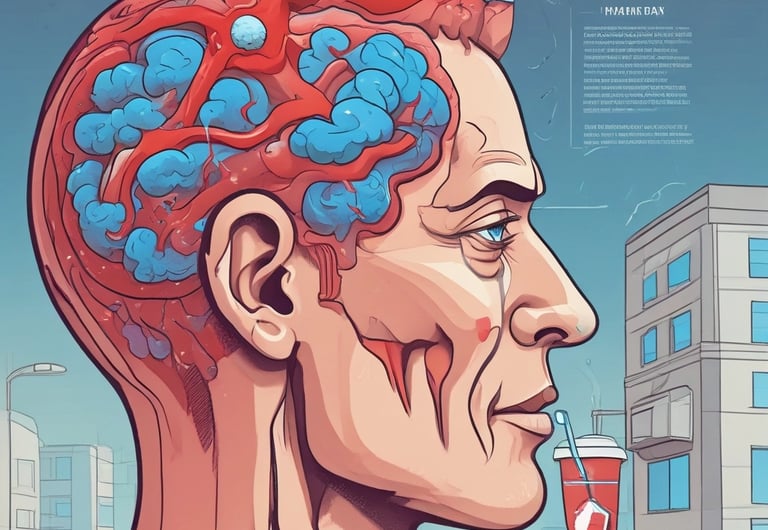
The "Brain Freeze" Mystery: Why Your Head Screams When You Eat Ice Cream
Introduction
We’ve all been there. You’re enjoying a delicious ice cream cone on a hot day, or maybe you’re chugging an icy smoothie a little too enthusiastically. Suddenly, out of nowhere, it hits you—a sharp, stabbing pain right in the center of your forehead. It feels like someone drove an icicle straight into your brain. You freeze, squeeze your eyes shut, and wait for the agony to pass.
We call it "brain freeze," but scientists call it sphenopalatine ganglioneuralgia. Don't worry, you don't need to memorize that. What you need to know is that this pain isn't actually in your brain at all. It’s a dramatic overreaction by your body's internal alarm system. Your mouth thinks it's under attack, and your head pays the price. But why does a cold treat cause such a hot mess of pain? Let’s dig into the weird science of why your body punishes you for enjoying that popsicle.
The "Panic Button" on the Roof of Your Mouth
The culprit isn't your stomach or your teeth; it’s the roof of your mouth, specifically the upper palate. This area is packed with tiny blood vessels and sensitive nerves that are directly connected to your brain.
The reason is that cold irritates the upper palate, responsible for the nerve nodes transmitting sensations to the brain.
When you eat something freezing cold, it rapidly cools down these blood vessels. In a panic, your body thinks, "Emergency! We are freezing!"
The "Fire and Ice" Reaction
Here is where the pain comes from. It’s a rapid-fire sequence of events:
Constriction: First, the blood vessels in your palate shrink tight (constrict) to save heat.
Dilation: Then, in a desperate attempt to warm the area back up, your body rushes a massive amount of warm blood to the spot, causing the vessels to swell open (dilate) instantly.
The blood vessels respond to cold by constricting or expanding, resulting in pain. This rapid change—squeeze, swell, squeeze, swell—activates the pain receptors. It’s a vascular whiplash.
Why Does My Forehead Hurt?
Wait, if the cold is in my mouth, why does my forehead hurt? This is a classic case of referred pain. The main nerve involved is the trigeminal nerve. This big nerve is responsible for sensation in your entire face.
When the nerves in the roof of your mouth scream "Pain!", the signal travels up the trigeminal nerve highway. But because this highway also carries signals from your forehead, your brain gets confused. It can't tell exactly where the signal started, so it assumes the pain is coming from your forehead. It’s like a crossed wire in an old telephone switchboard.
When you feel cold, your body sends warm blood to the cold spot, which causes pain. That rush of blood increases pressure in the skull, adding to the pounding sensation.
Conclusion
So, the next time you get a brain freeze, don't panic. You aren't damaging your brain. You’ve just tricked your body into thinking it's in danger, and it’s trying to save you with a rush of warm blood. It’s actually a sign that your nervous system is working perfectly—maybe a little too perfectly.
The cure? It’s simple. Stop eating for a second and press your tongue (which is warm) against the roof of your mouth. This warms up the sensors, calms the panic, and tells your brain, "False alarm, it’s just ice cream."
Frequently Asked Questions (FAQ)
Does everyone get brain freeze?
No! Interestingly, some people are more susceptible than others. Studies suggest that people who suffer from migraines are more likely to get brain freeze, likely because their trigeminal nerves are more sensitive.
Can cold air cause it too?
Yes. Walking outside into freezing wind without a hat can trigger a similar "cold-stimulus headache" because the external nerves on your forehead and sinuses react the same way to the sudden temperature drop.
Is it dangerous?
Not at all. It’s painful, but harmless. It resolves itself usually within 30 seconds to a minute once the mouth warms up.









Contact
Téléphone
healthyyyyplus@gmail.com
+33 612379219