Embrace natural wellness with HerbalVoice. Expert insights on herbal remedies, superfoods, and holistic health to help you boost immunity, find balance, and thrive. Your journey to vibrant, natural living starts here
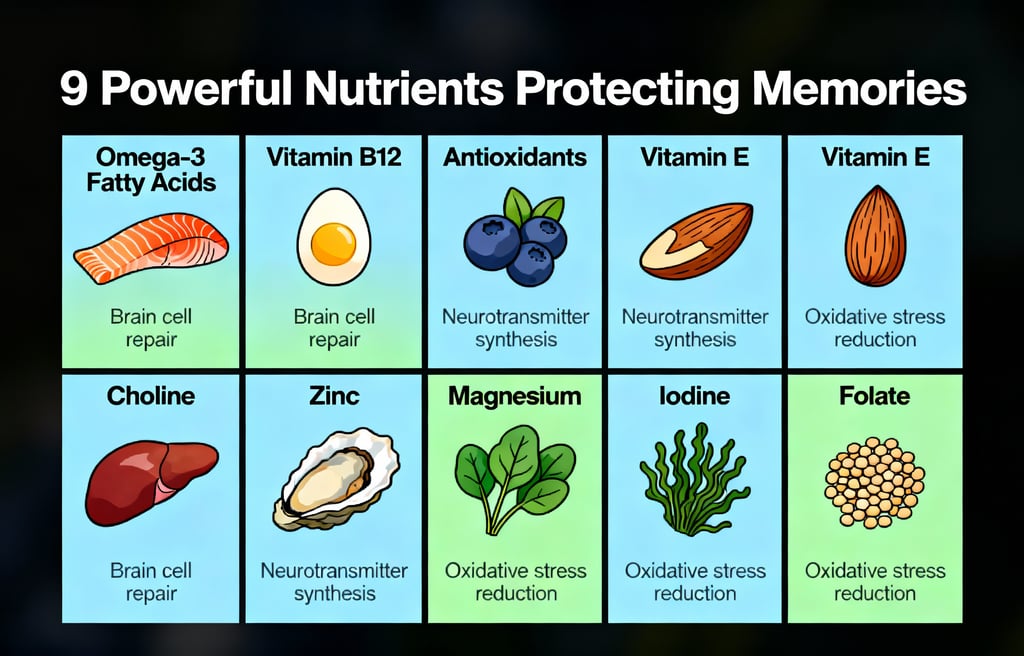
9 Powerful Nutrients to Help Protect Your Memories: The Brain-Boosting Guide You Actually Need
Discover the 9 game-changing nutrients that protect your memory and cognitive function. From omega-3s to catechins, learn what to eat and why your brain will thank you. Nutrients for memory protection Brain health supplements for cognitive function Foods that improve memory and learning
11/29/20257 min temps de lecture
9 Powerful Nutrients to Help Protect Your Memories: The Brain-Boosting Guide You Actually Need
Meta-Description: Discover the 9 game-changing nutrients that protect your memory and cognitive function. From omega-3s to catechins, learn what to eat and why your brain will thank you.
Your Brain Deserves the VIP Treatment
Look, let's be real—your brain is basically the hardest-working organ you've got. It's running the show 24/7, managing everything from your memories to your ability to remember where you put your keys (okay, so maybe that one's a little fuzzy). But here's the thing: your brain's health isn't just about genetics or wishful thinking. What you eat actually matters—a lot. And I'm not just talking about some vague "eat healthy" advice. I'm talking about nine specific, scientifically-backed nutrients that your brain is practically begging for. Let's dive in, shall we?
Omega-3's DHA: The Brain's Structural BFF
First up: omega-3 fatty acids, particularly a rockstar called docosahexaenoic acid (DHA). Think of DHA as the building material for your brain's cell membranes, sort of like the mortar between bricks. Your hippocampus—that's the memory center of your brain—is absolutely packed with this stuff, and for good reason.
Here's what makes it so special: when you're not getting enough omega-3s, your brain doesn't just feel a little foggy—it actually starts to struggle with learning and memory. But when you load up on these healthy fats, something pretty cool happens. Studies show that people with higher omega-3 levels have larger hippocampi (yes, that's the plural) and perform better on abstract reasoning tests. Even better? Those same folks tend to have less small-vessel disease in their brains, which is a major risk factor for cognitive decline.
The practical takeaway? Throw some salmon on the grill, snack on walnuts, or consider a fish oil supplement. Your future self will remember why you did it.
Magnesium: The Neurotransmitter Regulator
Here's the sobering part: roughly half of all Americans don't get enough magnesium. And when levels drop? Your brain's synaptic plasticity—basically, its ability to learn and form new memories—takes a hit. But the exciting news is that magnesium can actually improve cognitive function when levels are adequate. Research from MIT discovered that it helps maintain memory function even as you age, and it's particularly powerful at supporting the kind of brain changes that underpin learning.
You'll find magnesium in dark leafy greens (hello, spinach), nuts, seeds, and legumes. Pro tip: if you're worried you're not getting enough, magnesium L-threonate is a newer supplement form that can actually cross the blood-brain barrier more effectively than regular magnesium.
Vitamin E: The Brain's Bodyguard
Vitamin E is basically an antioxidant superhero, protecting your neurons from oxidative damage that can lead to cognitive decline. Think of oxidative stress as rust forming on your brain's machinery—vitamin E's job is to prevent that rust from building up in the first place.
The research is pretty compelling: people with higher dietary vitamin E intake show lower rates of Alzheimer's disease, especially when combined with other forms of vitamin E rather than just one type. While vitamin E supplementation hasn't yet been established as a treatment for neurodegenerative diseases, the preventative benefits—particularly through dietary sources—are solid.
You can find it in nuts, seeds, plant oils, and leafy greens. And here's a bonus: vitamin E works even better when you pair it with other antioxidants, so eat a varied diet and let them work together.
Vitamin B12: The Homocysteine Buster
Vitamin B12 might seem like just another B vitamin, but it plays a surprisingly crucial role in brain health by managing homocysteine levels. When homocysteine gets too high, it becomes a risk factor for brain atrophy and cognitive decline—basically, your brain starts to shrink and function declines.
Here's the clincher: research shows that B vitamin supplementation (including B12) can actually slow the rate of brain atrophy by about 30% in people with elevated homocysteine levels. In fact, people with the highest homocysteine levels at the start saw a 53% slowing of brain atrophy when treated with B vitamins. That's not just statistically significant—that's life-changing.
The catch? You need adequate B12 levels, plus folate and B6, to make this magic happen. If you're plant-based, this is especially important, since B12 is primarily found in animal products. Consider a supplement if needed, or chat with your doctor about getting your levels checked.
Anthocyanins: The Brain's Inflammation Fighter
Remember those colorful berries that taste amazing? They're packed with anthocyanins, flavonoid compounds that do something pretty spectacular: they reduce neuroinflammation and protect neurons from oxidative stress.
Anthocyanins are particularly impressive because they can actually cross the blood-brain barrier—meaning they reach exactly where your brain needs them most. Once there, they get to work reducing pro-inflammatory molecules, activating antioxidant defense systems, and preventing the kind of protein buildup (like amyloid-beta) that's linked to Alzheimer's. Studies even show they can improve vascular function and blood flow to the brain, which means better oxygen and nutrient delivery.
The best part? They're in berries you probably already love: blueberries, raspberries, blackberries. Add them to your breakfast or snack on them throughout the day. Your memory will thank you.
Vitamin D: The Brain's Neurotropic Factor
Vitamin D isn't just about bones and calcium—it's actually a neurosteroid that influences pretty much every aspect of brain function. It regulates neurotrophic factors (basically, molecules that support neuron survival), influences neurotransmitter synthesis, and even affects neuroplasticity.
What's particularly interesting? Vitamin D deficiency has been linked to an imbalance in excitatory and inhibitory neurotransmission in the brain, which affects learning and memory processes. On the flip side, adequate vitamin D levels support neuronal health, reduce neuroinflammation, and boost the brain's ability to adapt and learn.
Sunlight exposure is your best natural source, but you can also get vitamin D from fatty fish, egg yolks, and fortified foods. If you're in a northern climate or spend most of your time indoors, a supplement might be worth considering. Just get your levels checked first.
Quercetin: The Amyloid-Beta Fighter
Quercetin is a polyphenol found in foods like onions, apples, and tea, and it's got some seriously impressive anti-Alzheimer's properties. It's a potent antioxidant with strong anti-inflammatory effects, but here's where it gets really interesting: it actively prevents amyloid-beta proteins from clumping together into the toxic formations that damage brain cells.
Studies show that quercetin administration improves learning, memory, and overall cognitive function in animal models of Alzheimer's disease. Even better, it seems to work through multiple mechanisms—reducing oxidative stress, lowering inflammation, and even protecting mitochondrial function (your cells' energy powerhouses).
The good news? You don't need a prescription or fancy supplement. Just eat your apples with the skin on, add some onions to your meals, and enjoy a cup of tea. Simple, right?
Choline: The Acetylcholine Precursor
Choline is the raw material your brain uses to make acetylcholine, a neurotransmitter that's absolutely essential for memory and learning. The hippocampus—your brain's memory center—particularly depends on healthy acetylcholine levels. When this neurotransmitter is abundant, your brain is better able to encode new information, form long-term memories, and maintain cognitive function.
Here's the connection: choline supports hippocampal function and promotes the kind of synaptic changes that underpin learning and memory formation. Plus, adequate cholinergic activity is linked to better long-term potentiation (LTP), which is basically the cellular foundation of memory itself.
You'll find choline in eggs, fish, chicken, broccoli, and Brussels sprouts. If you're vegetarian or vegan, make sure you're getting enough through plant sources or consider a supplement.
Catechins: The Oxidative Stress Reducers
Last but definitely not least: catechins, particularly EGCG (epigallocatechin-3-gallate) from green tea. These polyphenols are basically cleanup crew for your brain, reducing oxidative stress and chronic neuroinflammation—two major drivers of neurodegenerative diseases.
What's particularly cool is that catechins work through multiple pathways simultaneously. They reduce free radicals, dampen inflammatory signaling, and support your brain's natural antioxidant defense systems. The result? Neuroprotection against Alzheimer's and Parkinson's disease, plus improved cognitive function.
A cup of green tea a day keeps cognitive decline at bay—and honestly, it's a much more pleasant health habit than most.
The Takeaway: Nutrition Isn't Just Food, It's Prevention
Here's the bottom line: your memory isn't something you just inherit and hope for the best. It's something you actively support through the choices you make every single day. These nine nutrients aren't magic—they're biology. They're backed by years of research and countless studies showing they genuinely protect and enhance cognitive function.
So start incorporating these foods into your daily diet. You don't need to overhaul everything overnight. Just add a little more fish here, some berries there, swap your regular coffee for green tea, and toss in some extra leafy greens. Your brain is working hard for you—let these nutrients work hard for your brain.
Frequently Asked Questions About Memory-Boosting Nutrients
Q: Can supplements replace a healthy diet?
A: Not really. While supplements can fill gaps, whole foods contain multiple nutrients and compounds that work synergistically. Aim for food first, supplements second.
Q: How long does it take to notice cognitive improvements?
A: That varies. Some people notice improvements in focus and memory within weeks, while others might take months. Consistency matters more than quick results.
Q: Are these nutrients safe for everyone?
A: Mostly, yes—they're all found naturally in foods. However, if you're on medications or have specific health conditions, chat with your doctor before starting supplements. Magnesium, for instance, can interact with certain medications.
Q: Which nutrient is most important?
A: They all matter, honestly. Your brain thrives when multiple systems are supported simultaneously. It's the combination that creates the magic.
Q: Can I get all of these nutrients from food alone?
A: Absolutely. A varied diet rich in fish, berries, nuts, leafy greens, eggs, and tea will cover most of these bases. That said, some people (especially as they age) benefit from strategic supplementation.
Contact
Téléphone
healthyyyyplus@gmail.com
+33 612379219