Embrace natural wellness with HerbalVoice. Expert insights on herbal remedies, superfoods, and holistic health to help you boost immunity, find balance, and thrive. Your journey to vibrant, natural living starts here
5 Science-Backed Sleep Hacks for Better Sleep
Discover 5 simple, science-backed sleep hacks to calm your mind, reset your body clock, and help you fall asleep more easily. Improve your sleep quality today!
1/26/20264 min temps de lecture
5 Easy Sleep Hacks to Help You Drift Off Tonight
Try these 5 simple, science-backed sleep hacks to calm your mind, reset your body clock, and fall asleep more easily.
Introduction
Poor sleep has a sneaky way of making everything feel harder—your mood dips, your focus disappears, and even small tasks feel like climbing a mountain. The good news is, you don’t need a full life overhaul to sleep better; small, smart tweaks to your evening routine can make a big difference. Here are five easy sleep hacks that gently calm your nervous system, support your body clock, and help you invite rest instead of chasing it.
Evening Tech Boundaries
1. Tame Blue Light Before Bed
Screens are notorious for disrupting sleep because the blue light they emit can suppress melatonin, the hormone that helps your body know it’s time to wind down. Charging devices in a different room is a simple but powerful way to remove temptation and protect your brain from that late-night scroll. Swapping your phone for a paperback, a journal, or even a gentle crossword tells your body, “We’re done for the day,” and helps you naturally shift into rest mode.
If you absolutely must use a screen, dim the brightness and use night-mode settings—though, truthfully, nothing beats the old-school charm of a book under a soft, warm lamp.
Calm the Mind
2. Try a Guided Visualisation
When your mind is racing, “just relax” can feel impossible. That’s where guided visualisations come in. Using a free meditation or sleep app, you can follow a calm voice that walks you through soothing imagery—like floating on a calm sea, strolling through a peaceful forest, or watching clouds drift by. This gives your brain something gentle and structured to focus on, instead of looping through worries or to-do lists.
The more you repeat the same visualisation, the more your brain starts to associate it with winding down. Over time, your body learns: “When I hear this voice or story, it’s time to sleep.”
3. Use Bedtime Affirmations
Affirmations might seem simple, but they can be incredibly effective when your internal dialogue is full of “I’ll never fall asleep” or “Tomorrow’s going to be awful.” Repeating a calm, compassionate phrase redirects that spiral. Try quietly repeating in your mind:
“Sleep finds me easily.”
“I am relaxing into stillness.”
“I am deserving of deep relaxation.”
You don’t need to force yourself to “believe” it 100%. Just allow the words to soften the edges of your thoughts. Over time, this gentle mental ritual can become a comforting cue that signals safety and rest.
Reset Your Body Clock
4. Get Outside Every Day
Your sleep at night is shaped by what you do in the daytime—especially your light exposure. Natural daylight helps regulate your circadian rhythm, your internal body clock that tells you when to feel awake and when to feel sleepy. Setting an alarm a bit earlier to take a short morning walk, or using part of your lunch break to wrap up warm and get outside, can work wonders.
Even 10–20 minutes of natural light, especially earlier in the day, helps your body understand, “This is daytime,” which in turn helps it understand, “This is night,” later on. Fresh air, gentle movement, and a change of scenery are bonus mood-boosters.
Optimize Your Sleep Environment
5. Make Your Bedroom Sleep-Friendly
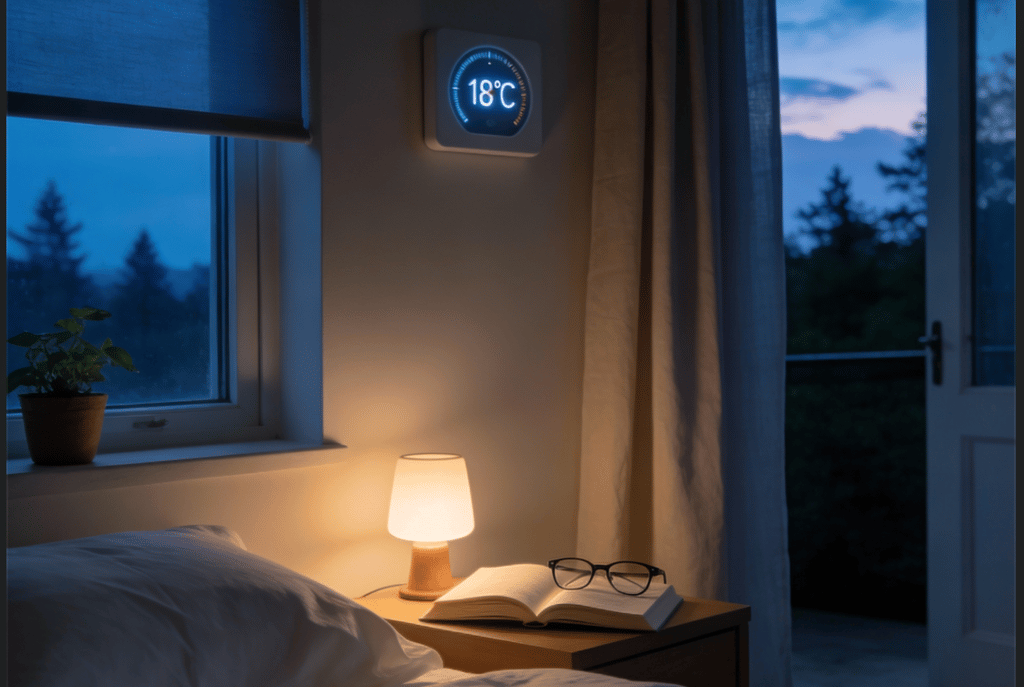
Your bedroom should feel like a cue for rest, not a second office or TV lounge. A quiet, dark, and cool space helps your body naturally slip into sleep mode. A room temperature around 18°C is often ideal for most people, as cooler air signals the body that it’s night-time and supports the natural drop in core temperature that happens before sleep.
You can try:
Using blackout curtains or an eye mask to block light.
Wearing earplugs or using white noise if your environment is noisy.
Removing harsh overhead lighting and using softer lamps in the evening.
Keeping your bed mostly for sleep and rest, so your brain links it with relaxation—not stress, work, or doomscrolling.
FAQ
Q: How quickly will these sleep hacks work?
A: Some people notice a difference after just one or two nights, especially with blue-light reduction and a cooler room. But sleep patterns often improve more noticeably over a couple of weeks of consistency.
Q: Do I need to do all five hacks at once?
A: Not at all. Start with one or two that feel easiest—like charging your phone outside the bedroom or trying a guided visualisation—and build from there as they become habits.
Q: What if my mind still races even with affirmations and visualisations?
A: That’s normal at first. The goal isn’t to “force” sleep, but to give your brain something gentler to focus on. If worries keep coming, you can try a quick “worry dump” in a notebook before bed so your thoughts have somewhere to go.
Q: Is it OK to nap during the day if I sleep poorly at night?
A: Short naps (around 20 minutes) earlier in the day can be fine for some people, but long or late naps can make it harder to fall asleep at night. If you’re struggling with insomnia, it often helps to keep naps brief or skip them temporarily.
Q: What if these tips don’t help my sleep at all?
A: If your sleep doesn’t improve after a few weeks—or you’re dealing with severe insomnia, nightmares, or daytime exhaustion—it’s worth speaking to a healthcare professional. There may be underlying issues like sleep apnea, anxiety, or hormonal changes that need tailored support.
Conclusion
You don’t need perfection to sleep better—just a few intentional shifts that help your body and mind feel safer, calmer, and more ready to let go. Reducing blue light at night, guiding your thoughts gently, stepping outside for daylight, and creating a cool, quiet, dark bedroom are all simple, realistic changes that build on each other. Start small, stay kind to yourself on the rough nights, and let your new habits slowly teach your brain: “It’s safe to rest now.”
Contact
Téléphone
healthyyyyplus@gmail.com
+33 612379219